Saturday, 26 November 2011

Preliminary Evaluation

How effective is the combination of your main product and your film poster?

I think my poster complements my film well; the audience is attracted to the main character immediately when viewing the poster, in the film he is also the central focus throughout. The character in the poster is very isolated and shows emotions of dominance in his stance yet remorse in the way that he is looking away from the camera and his head is tilted down. The poster is light but has a dark outline to it; this is to portray emotions surrounding the character, guilt, regret and anger. The title of the film itself ‘Individuality’ is a font which I found on ‘1001fonts.com’, it connotes death as it is very similar to dripping blood, however I chose not to add the red colour for blood, as the death which occurs in the film does so through suffocation and therefore is not bloody at all, however the font portrayed the genre well, and so is the reason I chose it. The text to the left of the poster is a quote taken from the film; it is in the colour red to suggest death to the audience, the reason in which this quote is said in the film, it is put very simply and is using a very simplistic font also to portray feelings of sorrow, which is the emotion I hope the audience feel through his tone of voice when saying this line.

What have you learned from your audience feedback?

I was very happy with the audience feedback; I thought at the start maybe the film was a bit too predictable and that with music it would’ve been a lot better in terms of the potential atmosphere however the audience reassured me that not having music enhanced the emotions in the film. The audience were kept on ‘the edge of their seat’ throughout the film as it switched between flashbacks and current time. I was particularly impressed with comments surrounding the character’s emotions and the way in which the audience understood him. Some members of the audience said they like the fact that at the start of the film they felt sympathy towards the main character as he seemed isolated and lonely after the death of the featured girl, however soon changed their opinion of him when they discovered through flashbacks that he was in fact the murderer and towards the end of the film felt hatred towards him. This was exactly the emotion I wanted to evoke as the plot unravelled.

What have you learned during the course of this project and what targets for improvement do you need to set for the main task?

I feel a lot has been learnt during the process of the preliminary task; it was the first film I had filmed myself and edited myself with minimal help. I felt my largest achievement was editing the film myself; I enjoyed this part of post-production and learnt basics which I will continue to use in the main task. I ranged in the type of shots I used and felt these portrayed the story and emotions well. There were however some errors, one key error was the fact that I didn’t white balance my shots, however luckily in the preliminary it didn’t affect the shots too drastically, however I will definitely white balance in the main production as this will add to the definition of the film. Also I feel that some of my shots were a little too shaky and although this did add to the effect of the genre, I feel it would’ve been better with more still shots. Throughout editing the film I asked for feedback from people in my class which lead to some scenes being removed for better performance, for example, a scene in which the murder is seen fully with the pillow going over the woman’s face was deleted as it wasn’t necessary and without it there was more suspense for the audience. For my main task I aim to improve on the types of shots I use and improve my editing techniques also, one thing I would like to do in the main task is add a central focus with and outlined blur and also I would like to distort the background music.

Preliminary Poster


I think the poster portrays the film well; the poster first gains attention through the image used, which is a still shot taken during filming. The shot was specifically done with the character facing away from the character and towards the floor to express feelings of regret and guilt, these are the emotions also portrayed throughout the film. The text, both the title and quote, are used to show the genre of the film as well as the dark couloring used in the shot itslef.

Monday, 3 October 2011

Production Schedule

Contact Details:
Ruth Cooper- 07949740076
Nathan Lee
Scene 1
Location: Lake, Peterborough
Technical Requirements: Camera (with SD card), Tripod, Sound, Lighting Kit
Scene 2
Location: My House
Technical Requirements: Camera (with SD card), Tripod, Sound, Lighting Kit

Shooting Schedule

Scene 1
Location: Lake, Hampton, Peterborough
Meeting Time: 3:50pm
Setup Start Time: 4pm
Setup Finish Time: 5pm
Shooting Start Time: 4:15pm
Shooting Finish Time: 4:45pm
Scene 2:
Location: My House, Peterborough
Meeting Time: 5:50
Setup Start Time: 6pm
Setup Finish Time: 7pm
Shooting Start Time: 6:15pm
Shooting Finish Time: 6:45pm

Script

Ruth Script                                                                                                   

Sunday, 2 October 2011

Thriller Character- Theories


There are a number of theories which directors base their characters on, each model contains the different type of characters you would expect to see in a thriller, the models are very stereotypical to the thriller genre and therefore some films may contain characters which fit exactly to one particular theory, whereas others which twist their plot to break the conventions a little, may include characters which fit to several different theories. There are four main models which are, Erying Goffman, Vladimir Propp, John Campbell et al. and Jonathan Bishop.
I believe Jack fits some parts of Goffman’s theory and Bishop’s theory. He is the protagonist in the film, taking a leading role; he also has a background which isn’t totally clear to the audience due to his schizophrenia. He is driven by forgiveness forces and at times destructive forces but he always tries to better than he is to overpower his illness and do the best for his son.

Tuesday, 20 September 2011

Thriller Character- Character Creation (Part B)

I believe my character holds similar characteristics to Jason Bourne due to the fact that he is someone he doesn't want to be. Jason Bourne is a trained assassin who wants out, he doesn't want to be the villain anymore; likewise Jack is a schizophrenic who murdered a young women, to this day he remains regrettable and begs for forgiveness as this is a character he wishes never existed.


I also believe Jack is similar to Jack Torrance from 'The Shining' as they both switch character personality, from good to bad and both have family who they want the best for. Both Jack's have a son who they would die for, even though Jack Torrance tries to kill his son this is due to the demons he is possessed by. During 'The Shining', after being accused of strangling Danny(his son), Jack speaks to Loydd of how he would never hurt the boy and how he's everything to him, similarly Jack(Individuality) is a character who shares great love with his son and tries his hardest to protect him.


In a way my character is also similar to Annie Wilkes from 'Misery', her and Jack are both obsessive, or at least Jack used to be before diagnosed with schizophrenia. Annie has an obsession for the main character in the novels written by Paul, Jack had an obsession for the woman he murdered, he, like Annie, couldn't face rejection and dealt with it through harm and danger.


Monday, 19 September 2011

Thriller Characters- Character Creation (Part A)

Name: Jack Wilson
DOB: 02/06/1975
Weight: 13st
Height: 5ft, 11
Hair colour: Brown
Eye colour: Brown
Ethnicity: White British
Occupation: An office worker
Sexual orientation: Heterosexual
Marital Status: Widower

He is a handsome man who takes pride and care in his appearance; he is always dressed smartly both in and out of work. At work he is usually wearing a black suit, white shirt and tie, outside of work he dresses smart casual, with either a plain t-shirt and jeans or shirt and trousers. He is fairly tall and slim; his skin is slightly tanned with a well defined facial structure and is clean shaven. His hair is brown, short and is styled daily.


Jack is fairly confident and determined, this is due to events in his life which have made him stronger as a person. He likes to just get on with things himself and very much enjoys being alone, he feels he only hurts the people who are close to him. He is a very keen learner who wants the best in life, he is very forgiving and tries to move forward from events in the past.

Jack has recently been released from prison, he had been imprisoned for murdering a young woman 10 years ago. Whilst in prison he regularly saw a psychiatrist who diagnosed him with schizophrenia. Sometimes Jack hears voices, he often has flashbacks to the murder he commited and regrets this greatly. This illness can make him feel trapped and with no sense of belonging, sometimes leading to paranoia and feelings of worthlessness. Jack just wants to be an ordinary person and tries his hardest to achieve this, however his illness holds him back.

Similar Products- Misery Characters

The film Misery (1990) was directed by Rob Reiner and is based on the novel ‘Misery’ written by Stephen King. The film involves two main characters Paul Sheldon, a famous writer, and Annie Wilkes, a nurse who rescues Paul.

Paul Sheldon
We are introduced to Paul Sheldon, who is sitting in a dark room, smoking a cigarette and drinking a glass of champagne as he writes a manuscript, as a distraction from ‘misery’, a series of novels which he has written previously. For deeper concentration in his writing, Sheldon heads on his way to a remote getaway in Colorado. However on his way to Colorado there is a blizzard which reduces road visibility and as a result he heads off road and crashes into thick snow; there he is rescued by a woman named Annie Wilkes. She brings Paul to her house in the middle of nowhere and cares for him, due to the accident Paul is left incapacitated and therefore is bedridden. He is very grateful to Annie who, in the beginning, looks after Paul very well. He realises that Annie is a big fan of his book ‘Misery’ and the character of which it is based on, Misery Chastain. When Annie realised that Paul had killed off Misery in the book, she had an outburst of anger demanding him to resurrect misery the way she wanted him to.

Paul realised that Annie was a psychopath and he tried several ways of escaping. However he didn’t want to try and escape in an obvious way that she would see. To start with he took some medication from a cupboard in order to poison her during dinner. He was very kind to her to ensure she wasn’t suspicious of his plans, she was very pleased when he asked her for dinner to speak of Misery, the character in his books, she thought they were getting closer together. However his plan did not succeed during dinner and when she noticed the medicine had disappeared she broke both his legs leaving him bedridden, ensuring he wasn’t able to escape so that he would continue the story of Misery the way she wanted. Paul knew he had to plan something less obvious in order to get away. He maintained his kind acts towards her to retain her sudden outbursts, he told her he loved her and promised to finish the story, without swear words and violence as she previously got angry with him because of the novel having explicit language. He was clever with his last attempt of escaping, he asked her to go to the shop to buy him some more paper and ink in order for him to finish the novel as a gift for her, manipulating her into thinking he was doing good for her. Whilst she was at the shop he made his way to the kitchen from which he took a knife…when she returned he burned the novel in front of her then stabbed her to death after she killed the sheriff in front of him.

Throughout the film we empathise with Paul, due to the situation in which he’s placed. Annie becomes more violent towards him, which changes him as a person. However we know that he is a clever man, through the literature he creates. We see that he is very caring from the start when he is with Annie and shares his novel with her. We also know he is a loving character as he tries so helplessly and desperately to escape so that he is re-united with his family.  He uses his intelligence to escape through manipulative acts, which he is forced to do, we know that he has to do these acts to get away from Annie so even though the things he does are acts of evil, he was tortured by Annie and so we are desperate for him as well.

I think Paul has the right ethics and morals throughout, at the start we see he is a caring man, trying to please his fans but exploring different types of writing to interest a wider audience to his novels, he changes his style of writing through using explicit language etc. to appeal to his target audience, all he wants to do is please his fans and be a loving father and husband. When with Annie, even though she is horrible to him he still continues to be kind to her. However this kindness turns into manipulative acts in order to escape, but she puts him through a lot which drives him to this and so I believe his actions are backed with good reasoning as he wishes to continue his writing and be with his family.


Annie Wilkes
When we are first introduced to Annie she is rescuing Paul from a car accident, she takes him from the scene and brings him back to her home in the countryside where she gives him a bed, food and medicine. She comes across as a very kind, loving, caring character, looking out for Paul’s well-being. She wears a woolly jumper and plain trousers, giving us the impression of an innocent, lonely individual, who is taking Paul into the warmth, giving him maximum comfort. We then discover that she is a big fan of Paul’s novels, in particular the main character of his books, being Misery. However we later realise that her liking for his books is a large obsession rather than just a fan, when she has an outburst after realising the main character is killed off in the books. When Paul notices the tablets which she has been giving him are sleeping tablets, we soon become known to the fact that she is a psychopath, who wishes Paul to change his novels so the ending is happy and the way she wants. Her obsession is so big for the main character of the book, that she tortures Paul by breaking legs so that he is incapacitated and therefore is forced to remain in the house to finish the novel in a way which will please her. Towards the end of the film she is very close to being caught by the Sheriff, she hides Paul in the basement when she sees the Sheriff coming, but before he is able to find out the truth she kills him in her home, and Paul is forced to kill her.

We learn that Annie, the antagonist, is a very deceiving character, who comes across as loving and kind. She always has a large smile upon her face and in the beginning treats Paul with a lot of respect. However we soon discover her split personality when she has several outbursts leading to her torturing Paul and killing the Sheriff. She is a very manipulative character who has a deep obsession with the protagonist in the film, Paul, which leads to the audience learning she is psychopathic and does as much as she can in order to get what she wants.

She is a very immoral and unethical character due to the acts she commits. Her title is a nurse and therefore we expect her to take the role of looking out for the larger population, instead she does the opposite and kills a person whilst torturing another; these are not acts we expect from a smiley, innocent woman in her early 40’s. Unlike Paul, her acts of evil are not backed with good reasoning instead they are backed by an obsession. She does however appear to be moral and ethical at first when she rescues Paul, and I don’t believe her intentions were to cause hurt and pain, but she feels this was forced upon her.

Similar Products- Protagonist vs Antagonist


In every film, play, or literary text, there is always a protagonist and antagonist. When creating a thriller film, for example, these characters are formed to lead the story in a particular direction, the protagonist supposedly leads in a positive direction, whereas the antagonist tries to put the protagonist ‘off the tracks’, if you like, causing twists and dangerous events which form the thrills and mystery of the film.

The protagonist is the main character of a play, drama or literary text. The protagonist is usually a hero or heroine and leads the plot, creating events throughout the storyline forming, in thrillers, its complexity and mystery. We therefore view the protagonist in most films as being the ‘good guy’ however in thrillers, there are often twists which portray the protagonist as being the ‘good guy’ but instead are used as a tool to expose another character, leading the audience to realise that they are actually the anti-hero or villain.

The antagonist on the other hand is the character who is opposed to the protagonist. The antagonist creates situations which the protagonist must overcome, these obstacles are usually put in place to danger the protagonist, leading in some cases, to danger or life threating situations for the protagonist. Throughout the storyline or film the protagonist is in constant battle with the antagonist as they both fight for what they believe is right.

‘The Shining’ is a psychological thriller by Stanley Kubrick, based on the novel by Stephen King. The protagonist in the film, Jack Torrance (played by Jack Nicholson), a writer who takes up the job as a caretaker in an isolated hotel, is firstly portrayed as a normal character- father and husband. However we soon discover his insanity as the plot is unravelled. At first we believe he is the ‘good’ character in the film, wanting to escape from noise to study and work quietly, bringing his family with him to the large and beautiful hotel at which he works. Later, we discover through the use of his son Danny, who is telepathic, that in actual fact Jack is on a mission to kill his son and family. There are several antagonists in the film; those are the characters who hold ‘the shining’, a gift which makes them telepathic, giving them the ability to see into the future as well as the past. One could argue therefore that both Danny and Dick are both the antagonists as they possess ‘the shining’ and both communicate with each other using this gift to escape from Jack. Conversely, one could argue that the hotel itself is the antagonist as it maintains all these bad demons from the past which act as a motive for the characters in the film, one being the two young girls who were murdered years before at the hotel.


Unlike ‘The Shining, ‘The Bourne Identity’, a thriller directed by Doug Liman has a distinctive protagonist and antagonist, the protagonist being Jason Bourne (played by Matt Damon) and the antagonist being Alexander Conklin. Jason Bourne is the main character in the film and we are introduced to him right from the start, throughout the film he is seen as trying to escape from himself and the audience empathise with him throughout as he tries to do what is right. Bourne’s character could also be portrayed as being an antagonist as he is a trained assassin who has killed many innocent people. Despite this, the audience are aware of the main antagonist throughout; Conklin is the chief member of ‘Operation Treadstone’, in the film he states, ‘The story he could --- forget it. I have the entire team on ‘stand-by.’ Castel is on him. If he fails? He won’t fail. And even if he does, I got another dozen right behind him. I don’t know if Bourne went rogue and I don’t need to know. All I want to hear is that he’s dead before he brings this whole thing down on our heads.” Being the antagonist in the film, he creates a number of dangerous situations for Bourne to overcome, using his ‘entire team’ to defeat Bourne, creating further twists in the plot due to the fact that when the audience think Bourne has escaped, another one of the CIA members is there to kill Bourne.


Similar to ‘The Shining’, ‘Silence of the Lambs’, a psychological thriller directed by Jonathan Demme, has a clear protagonist, Clarice Starling, but an unclear antagonist. Starling is the main character in the film, she is also the first character we see. She is a trainee police officer on a mission to find a serial killer Buffalo Bill. To get to Buffalo Bill Clarice uses serial killer Hannibal Lecter in order to find out further information on Buffalo Bill and his whereabouts. Buffalo Bill is undoubtedly an antagonist in this film as he is the main enemy, putting lives in danger; however you cannot deny Hannibal Lecter being an antagonist too, he is a serial killer who also inflicts danger to society, in fact during the film he kills two police officers in order to make an escape.
The film ‘Misery’ directed by Rob Reiner, has a defined protagonist and antagonist, the two main characters in the film, Paul Sheldon (protagonist) and Annie Wilkes (antagonist). Paul is a writer who wishes to cut off a character in his books in order to create a new style of writing to please his fans, however Annie, an obsessive fan, has a great love for this particular character and tortures Paul forcing him to keep the story how she wants it to be.


According to Jonathan Bishop, a theorist, there are 11 different types of characters which form the story behind any media text or production. The protagonist and antagonist are vital, they could fit into many different characters; using this particular theory the protagonist could be ‘Lurker’, it could also be ‘MHBFY Jenny’, similarly the antagonist could be ‘Troll’, it could also be ‘Iconoclast’, however, usually there is one main protagonist and antagonist leading the storyline or plot.

Character Analysis 1

Jason Bourne is a character played by Matt Damon in the Bourne Identity. He is the main protagonist in the film and through the course of the film we see his character develop as we and himself learn new things about him.
We are introduced to Bourne with an aerial view of him lying unconscious in the sea, where he is lifted out by Italian fishermen. The fishermen discover that Bourne has been shot in the back, they also find a microchip implanted in his body which contains a number to a safety deposit box. When Bourne gains consciousness the fishermen question him to gain more information about him, however he is unable to answer the questions even on his own name; the fishermen and himself realise at this point that he is suffering from amnesia as a result of a serious head wound. When inland Bourne goes to the safety deposit box where he finds several passports under different names, a gun, a large sum of money and other personal items. He later discovers he is being hunted by the police as he comes into combat with them, immediately after he meets a young woman named Marie of whom he offers a large sum of money in return of a car escape to Paris to get away from the police. When in Paris he is attacked in his own apartment where he defends himself well, disarming the attacker. He then tries to find out who the attacker is and why he is after him but the attacker was quick to commit suicide leaving Bourne with nothing. Bourne realises he is an assassin and was shot, left to die in the sea after aborting the assassination of Nykwana Wombosi, an African dictator. After being discovered in the hotel, they escape to the countryside to stay with Marie’s friend, however once again they are attacked by an assassin named Conklin. Bourne tracks Conklin’s vehicle and follows him to a safe house where he tells him he no longer wish’s to be an assassin, he then returns to Marie and they re-unite.
The film is all about Bourne discovering his identity. We learn at the very start he suffers from amnesia and as a result has no recall of the events that happened before his attack. Although later in the plot we discover that he is an assassin, the audience remain to have empathy towards him as to us he appears a different man; when he defends himself against the police, this is what we see, him defending himself rather than fighting with rage. This shows he isn’t who he wants to be, and that all this fighting is a life which he no longer wants, when escaping the scene he is very panicky, this would not be the behaviour of an assassin, he then confides in a woman who he puts a lot of trust in. A conventional assassin would have an emotionless feeling towards the situation and would have the attitude of being ‘one to himself’; instead we learn that Bourne does have these emotions of love even though before meeting Marie this wasn’t an emotion that existed in his life. I think this is something he learns about himself, maybe that he wants to be loved or to be like an ordinary man living an ordinary life.
Although Bourne may come across as being an antagonist due to him being an assassin, trained to kill people for a living, we soon discover that actually he is a good guy, and in fact is the main protagonist in the film. When we first see Bourne he is wearing normal brightly coloured clothes, rather than dark plain clothes, which you would expect a ‘bad guy’ to be wearing. Throughout the film we see moments of panic from him, suggesting he doesn’t want to be in the situations he is placed into, and the fighting he does is just instinct rather than him being a rebellious dangerous man, we as an audience feel he is an innocent person and want as much for him to be taken away from the CIA.
We see that Bourne is a caring person by the way he acts with Marie. At first on would presume he is very naïve and only cares for himself due to the fact that he changes Marie’s life by getting her involved in his problems. However he does offer her ways out through the course of the film, but she puts trust in him and they form a connection between them, this is when we realise he is a changed man who cares for people close to him.

http://www.youtube.com/watch?v=s4efr_NASQE&feature=related

Saturday, 17 September 2011

Similar Products- Silence Of The Lambs Analysis

‘Silence of the lambs’ is a psychological crime thriller, which provides thrills, suspense and tension throughout the film in many different ways to the audience. It is a film which is full of mystery, maintaining the audience at the ‘edge of their seats’ as they become involved in the unknown, which creates excitement for them as the plot unravels. There are many twists in the plot of ‘Silence of the lambs’, making the film very conventional yet also unconventional in some parts which create interest for the audience.

The film keeps the audience uncertain about events throughout as they are filled with cryptic clues, the title itself, ‘Silence of the lambs’ is a reference to Clarice’s childhood and the victims of the murders which Buffalo Bill carries out. When Clarice is younger she witnesses the death of a lamb which she could not save, this is a memory which remained in her head; when exchanging information with Hannibal Lecter she tells him of this event which happened in her early life, to which he uses as a psychological advantage as he Is always in her head, this is shown in a letter which he writes to her at the end of the film in which he hopes for her that ‘the lambs have stopped screaming’, referring to the lamb in her early life as well as the victims she tries to save. This shows the title as being cryptic itself which is very true to the thriller genre and is shown throughout the film when Lecter is exchanging information with Starling. Having cryptic clues throughout the film creates mystery for the audience leaving them in suspense which heightens the tension as they try to unravel the clues.
When we are first introduced to Hannibal Lecter, we see that he has been placed into a psychological unit, for a series of murders as a result of cannibalism. We learn straightaway that he is psychologically unwell, this is very conventional to a character of the thriller genre; he uses this to his advantage as he plays mind games with the protagonist, Clarice. This puts him in power, which builds suspense for the audience as they are aware of his capabilities yet uncertain of his actions through the course of the film. Although he is a dangerous and unnerving character who fits the conventions of the thriller genre, he does also break them as he helps Clarice catch Buffalo Bill. In a thriller it is very unusual for the protagonist and antagonist to work together; usually the protagonist and antagonist are conflicting characters which makes it debatable to whether he is an antagonist in the film as there is another obvious antagonist, being Buffalo Bill.

We learn that Clarice is an FBI trainee at the start of the film when we see her taking part in an assault course; her character is very unconventional as we would stereotypically expect a male to be taking the role of an FBI trainee and completing such activities. Whilst on a mission to catch Buffalo Bill we see her relationship with Lecter develop further than one would expect, often it is suggested that Clarice and Lecter’s minds are similar as a ‘connection’ is created between them. This forms tension amongst the viewer’s due to the dangerous situations she puts herself into.  Even though Clarice is breaking ‘police rules’ if you like, I would say this is conventional of a thriller film since a twist in the plot is being produced, therefore putting the audience into the unknown.

Buffalo Bill is undoubtedly an antagonist in this film, the audience fears him greatly mainly because we are told of his character throughout the film and hear of his actions, yet are only exposed to him a few times during the film, which leaves the audience unknown to what to expect when they finally see him and so the tension builds. I feel that his character is feared the most by the audience as his doings in the film are very much hidden throughout, so although you expect him to be psychopathic, you don’t realise to which extent until you see him. The fact that we see him rarely in the film is very unconventional to a thriller genre due to him being an antagonist in the film. Usually you would see the antagonist throughout the film and see the conflicts or the dangerous situations he is causing; Buffalo Bill however breaks this convention because we don’t see his actions from the start.

I believe ‘The silence of the lambs’ is conventional to the thriller genre in terms of the camera angles used; it is common for a thriller to use simple shots such as, mid shots, tracking shots, pan shots and zooms or close-ups. A particular scene which stands out for me when discussing camera angles is the one in which there is a zoom and close-up of Lecter as he gains more information about Clarice. The camera positioning used here is spot on when linking to narration. A zoom is used when Lecter is prompting Clarice for more information of her reasons for leaving home, when Clarice replies a mid shot is used, when comparing to the camera positioning used when Lecter talks, we can tell that she is somewhat uncomfortable due to the contradicting distance between her and the camera compared to Lecter and the camera. When the camera stops zooming on Lecter, this is when he gets an insight into Clarice’s mind; one could interpret this shot being from Clarice’s mind and how Lecter is constantly in it.

The lighting used is mainly naturalistic and low key which is very conventional to the thriller genre, making settings dark and mysterious. In terms of lighting, the scene in which Buffalo Bill is killed is one which ticks all boxes for the thriller genre in the way that it creates suspense, mystery and tension for the audience; this is due to the fact that the audience are aware of where Buffalo Bill is, however are unsure of what he will do to Clarice and it also makes the audience fear for Clarice as she is unaware of his whereabouts in the basement.
The music used in ‘Silence of the lambs’ is very slow yet progressive to create tension as scenes build, the timing is a major contributor to the sound, which is key to the thriller genre because even when there are moments of silence, tension is also built as the audience are put at the ‘edge of their seats’ whilst remaining deeply concentrated on the narrative.

Overall I feel that ‘Silence of the lambs’ sits comfortably in the thriller genre, featuring many of the conventions you would expect to see, including an antagonist and a protagonist, twisted plots, life threatening characters, police officers, the use of guns as well as the simplistic camera angles and sound samples used, to create suspense, tension and thrills for the viewers. 

Wednesday, 14 September 2011

Thriller Genre

Thriller is a genre which is full of suspense, thrills and mystery.  A film which is of the thriller genre keeps the audience at the ‘edge of their seats’ as the plot gradually reveals the unknown. A thriller often involves a character who is placed into a situation of mystery, an escape or a dangerous mission, which is often conflicted with a life threatening situation. The plot often builds towards a climax and in many thrillers the end, or the consequence, is shown at the beginning and is followed by the cause, keeping the audience involved as they try to unravel the mystery themselves. Many thrillers are combined with another genre, e.g. an action adventure thriller. There are also many sub genres of thriller e.g. psychological thriller.

Monday, 12 September 2011

Thriller Timeline

‘What women suffer’ (1911), directed by Alfred Rolfe- A silent Australian film.

‘Safety Last’ (1923), directed by Fred C. Newmayer and Sam Taylor- A romantic comedy thriller involving the main character Harold Lloyd travelling to the city in search of fame and fortune in order to please and provide for his wife.

The early 1940s through to the 1960s saw the success of Alfred Hitchcock (famously known for his thrilling, suspenseful and intense films) his first thriller being ‘Rebecca’, others being ‘Notorious’, ‘Strangers on a plane’, ‘Psycho’ and ‘Rear window’. Many thrillers in the 1940s/50s were a hybrid of film noir genre, these include ‘Double Indemnity’ (1944), ‘The third man’ (1949) and ‘Touch of Evil’ (1958).

‘Jaws’ (1975), directed by Stephen Spielberg- After a few deaths by a shark in the waters of Amity Island the new police chief tries to keep the people safe.


The Shining’ (1980), directed by Stanley Kubrick- A psychological horror thriller, famously written by Stephen King, a novel which grips the audience through suspense as the father becomes violent through psychological presence affecting the families future.

‘The silence of the lambs’ (1991), directed by Jonathan Demme- A crime thriller starring Jodie Foster, as an FBI trainee, who whilst trying to find a serial killer, shares information with a killer in order to gain more information on her target.


‘The Dark Knight’ (2008), directed by Christopher Nolan- An Action crime thriller in which Batman, alongside Lieutenant Jim Gordon  and Harvey Dent, battles to keep the city protected whilst being antagonised by the Joker who creates chaos for all who live in Gotham.


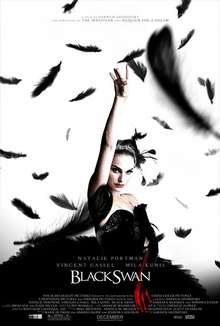
More recent thrillers being ‘Inception’ (2010), directed by Christopher Nolan- an action adventure thriller and ‘Black Swan’ (2010), directed by Darren Aronofsky- a psychological thriller